Investing and associated risks
It is extremely important to us that investors on the TWINO platform are well-informed about the investments they can make, and risks associated with it, so that they can make confident investment decisions and get the best out of their experience with TWINO. While the below description highlights the nature and risks related to investing on the TWINO platform, we urge you to carefully consider whether such investments are suitable for your knowledge and experience in the financial markets, your financial situation, and your investment objectives.
Available type of investments
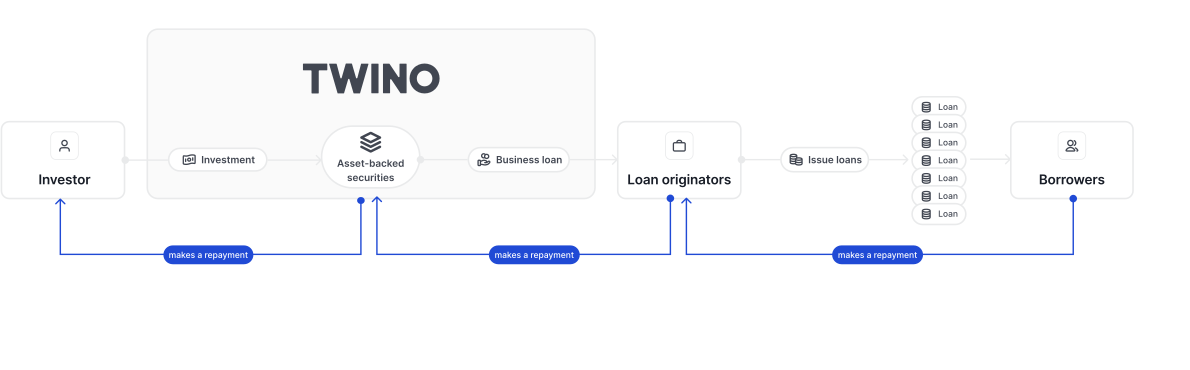
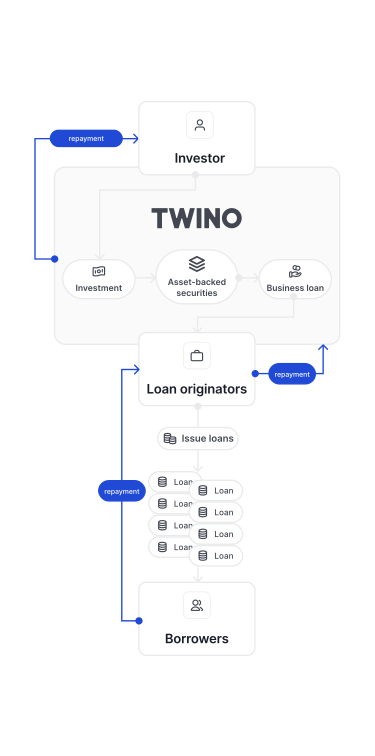
Securities are financial instruments backed by claim rights against a loan originator — a legal entity that issues and services loans. This means your investment is not directly tied to borrower repayments. Instead, the loan originator assumes the obligation to ensure regular repayments to investors, making the cash flow more predictable and secure. Detailed information about the Securities is available in the Base Prospectus, Key Information Document, and Final Terms.
Consider risks before deciding to invest
Investing always involves undertaking risks. Investors should carefully consider the risks related to the Securities described below and the other information contained in the Base Prospectus of the specific issuer before deciding to invest. Even though TWINO strives to do the best possible risk management, investors should be aware that the value of their investments could decline due to any of these risks, and Investors may lose (a part of) their investment. Investors should, among other things, consider the risks related to the Securities and the trading market:
Risks associated with investing
Third Parties Related Risks
TWINO’s operations depend on various third parties- including Issuers, Lenders, IT service providers and banks. Any disruption, failure, or non-compliance by these partners could impact service quality, increase costs, or negatively affect business performance.
Operational risk
TWINO faces and manages operational risk which summarizes the uncertainties that day-to-day business activities bring. This risk can result from breakdowns in internal procedures, people and systems. Operational risk is managed with help of well-developed internal processes and procedures ensuring the risk is managed accordingly in a timely manner. The main risk factors are dependency on third-party providers and information technology systems as well as legal risks that should be considered in particular. To optimize costs of business operations, TWINO uses information technology services provided by the third parties such as cloud computing providers, communication providers, IT development service providers and license providers. To be able to distribute the Security, for each of the Series, TWINO must coordinate the security issuance process with Nasdaq CSD SE. However, it should be noted that TWINO might face the risk of Security issuance interruption. If any IT system of the business operations were to fail, any or all stages of the security distribution process could be affected. There can be no assurance of possible disruptions (even short-term) to the functionality of IT systems used by TWINO and IT infrastructure. Any inability to maintain existing business relationships with banks, IT service providers and other third-party providers or the failure by these third-party providers to maintain the quality of their services or otherwise provide their services to the Distributor may have a material adverse effect on the Distributor’s business and reputation.
Legal Risks
• The TWINO operations are subject to regulation by Bank of Latvia and other state authorities, including, but not limited to, laws and regulations relating to provision of investment services, as well as to anti-money laundering laws and sanction regulations. Failure to comply with existing laws and regulations applicable to the TWINO’s operations, or adverse findings of Bank of Latvia inspections, may result in the imposition of material fines or penalties or more severe sanctions, including preventing the Distributor from continuing substantial parts of its business activities, suspension or revocation of the licenses, or in criminal penalties being imposed on the officers. • The Issuer’s operations are subject to regulation by a variety of financial services and other state authorities, including, but not limited to, laws and regulations relating to issuance of Securities and personal data processing. Failure to comply with existing laws and regulations applicable to the Issuer’s operations, or to obtain and comply with all authorizations and permits required for the Issuer's operations, or adverse findings of governmental inspections, may result in the imposition of material fines or penalties or more severe sanctions, including preventing the Issuer from continuing its business activities, or in criminal penalties being imposed on the Issuer’s officers. • The Loan Originator’s operations are subject to regulation by a variety of consumer protection, financial services and other state authorities, including, but not limited to, laws and regulations relating to the provision of payment services, consumer crediting and consumer rights protection, debt collection, and personal data processing. Failure to comply with existing laws and regulations applicable to the Loan Originator’s operations, or to obtain and comply with all authorizations and permits required for its operations, or adverse findings of governmental inspections, may result in the imposition of material fines or penalties or more severe sanctions, including preventing the Loan Originator from continuing substantial parts of its business activities, suspension or revocation of the licenses, or in criminal penalties being imposed on the officers
Risks related to macroeconomic developments
The results of the Loan Originator’s operations are dependent on the macroeconomic situation. In particular, the Loan Originator’s operations are affected by such factors as the rate of inflation, the unemployment rate and changes in consumer affluence levels. Any negative effect on the economy may decrease income of the Loan Originator’s customers and thus the ability to fulfil their obligations. Such effects may also result in insolvency of the Loan Originator’s business partners, which could affect the Loan Originator’s operations, as well as its financial standing. Lastly, in case of an economic downturn, the price of the Securities and the ability of the Loan Originator to acquire further financing may be adversely affected.
Repayment risk
By investing in Securities, the investor is subject to the risk of credit default which may result in full or partial loss of the invested principal amount. No collateral, pledge or other types of guarantees will be available for the investors with respect to the Securities. However, the Securities will be backed by the Loan Receivables which have a pledge over the Underlying Portfolio. In case of Issuer’s insolvency, the investor has the right as other creditors of the relevant group to receive the payment of the outstanding principal amount of the Securities and the interest accrued on the Securities according to the relevant laws governing the insolvency process of the Issuer.
Liquidity risk
The Securities are not admitted to any trading venue and thus, can be considered as illiquid instruments. The potential buyers and transferees are limited only to other investors on the TWINO website (www.twino.eu). Neither the Issuer, nor any other person guarantees the minimum liquidity of the Securities prior the initially agreed term has expired. The investor should consider that there may be difficulties in selling the Securities to other investors on the Platform, which might lead to selling at a discount to liquidate the investor’s position. Discount rate and premium shall be capped to maximum of 29.9 per cent (for discount) and 4.9 per cent (for premium) change from Nominal Value correspondingly.
Price risk
Securities shall be repaid for their Nominal Value; however, the fair value of the Security might significantly differ from the initial Nominal Value as price of the Security after the Issue Date may fluctuate, depending on what other investors are willing to pay for it. Neither the Issuer, nor any other person undertakes to maintain a certain price level of Securities, therefore a Securityholder may bear loss if they decide to sell the Security.
Tax risk
Tax rates and the payment procedure of taxes that are in force at the moment of the purchase of the Securities and are applicable to both tax residents and non-residents of Latvia may change over time. The Issuer will not compensate the investor for any increase in taxes to be paid by them, therefore, the inventor may receive smaller payments related to the Securities over time.
Third Parties Related Risks
TWINO’s operations depend on various third parties- including Issuers, Lenders, IT service providers and banks. Any disruption, failure, or non-compliance by these partners could impact service quality, increase costs, or negatively affect business performance.
Operational risk
TWINO faces and manages operational risk which summarizes the uncertainties that day-to-day business activities bring. This risk can result from breakdowns in internal procedures, people and systems. Operational risk is managed with help of well-developed internal processes and procedures ensuring the risk is managed accordingly in a timely manner. The main risk factors are dependency on third-party providers and information technology systems as well as legal risks that should be considered in particular. To optimize costs of business operations, TWINO uses information technology services provided by the third parties such as cloud computing providers, communication providers, IT development service providers and license providers. To be able to distribute the Security, for each of the Series, TWINO must coordinate the security issuance process with Nasdaq CSD SE. However, it should be noted that TWINO might face the risk of Security issuance interruption. If any IT system of the business operations were to fail, any or all stages of the security distribution process could be affected. There can be no assurance of possible disruptions (even short-term) to the functionality of IT systems used by TWINO and IT infrastructure. Any inability to maintain existing business relationships with banks, IT service providers and other third-party providers or the failure by these third-party providers to maintain the quality of their services or otherwise provide their services to the Distributor may have a material adverse effect on the Distributor’s business and reputation.
Legal Risks
• The TWINO operations are subject to regulation by Bank of Latvia and other state authorities, including, but not limited to, laws and regulations relating to provision of investment services, as well as to anti-money laundering laws and sanction regulations. Failure to comply with existing laws and regulations applicable to the TWINO’s operations, or adverse findings of Bank of Latvia inspections, may result in the imposition of material fines or penalties or more severe sanctions, including preventing the Distributor from continuing substantial parts of its business activities, suspension or revocation of the licenses, or in criminal penalties being imposed on the officers. • The Issuer’s operations are subject to regulation by a variety of financial services and other state authorities, including, but not limited to, laws and regulations relating to issuance of Securities and personal data processing. Failure to comply with existing laws and regulations applicable to the Issuer’s operations, or to obtain and comply with all authorizations and permits required for the Issuer's operations, or adverse findings of governmental inspections, may result in the imposition of material fines or penalties or more severe sanctions, including preventing the Issuer from continuing its business activities, or in criminal penalties being imposed on the Issuer’s officers. • The Loan Originator’s operations are subject to regulation by a variety of consumer protection, financial services and other state authorities, including, but not limited to, laws and regulations relating to the provision of payment services, consumer crediting and consumer rights protection, debt collection, and personal data processing. Failure to comply with existing laws and regulations applicable to the Loan Originator’s operations, or to obtain and comply with all authorizations and permits required for its operations, or adverse findings of governmental inspections, may result in the imposition of material fines or penalties or more severe sanctions, including preventing the Loan Originator from continuing substantial parts of its business activities, suspension or revocation of the licenses, or in criminal penalties being imposed on the officers
Risks related to macroeconomic developments
The results of the Loan Originator’s operations are dependent on the macroeconomic situation. In particular, the Loan Originator’s operations are affected by such factors as the rate of inflation, the unemployment rate and changes in consumer affluence levels. Any negative effect on the economy may decrease income of the Loan Originator’s customers and thus the ability to fulfil their obligations. Such effects may also result in insolvency of the Loan Originator’s business partners, which could affect the Loan Originator’s operations, as well as its financial standing. Lastly, in case of an economic downturn, the price of the Securities and the ability of the Loan Originator to acquire further financing may be adversely affected.
Repayment risk
By investing in Securities, the investor is subject to the risk of credit default which may result in full or partial loss of the invested principal amount. No collateral, pledge or other types of guarantees will be available for the investors with respect to the Securities. However, the Securities will be backed by the Loan Receivables which have a pledge over the Underlying Portfolio. In case of Issuer’s insolvency, the investor has the right as other creditors of the relevant group to receive the payment of the outstanding principal amount of the Securities and the interest accrued on the Securities according to the relevant laws governing the insolvency process of the Issuer.
Liquidity risk
The Securities are not admitted to any trading venue and thus, can be considered as illiquid instruments. The potential buyers and transferees are limited only to other investors on the TWINO website (www.twino.eu). Neither the Issuer, nor any other person guarantees the minimum liquidity of the Securities prior the initially agreed term has expired. The investor should consider that there may be difficulties in selling the Securities to other investors on the Platform, which might lead to selling at a discount to liquidate the investor’s position. Discount rate and premium shall be capped to maximum of 29.9 per cent (for discount) and 4.9 per cent (for premium) change from Nominal Value correspondingly.
Price risk
Securities shall be repaid for their Nominal Value; however, the fair value of the Security might significantly differ from the initial Nominal Value as price of the Security after the Issue Date may fluctuate, depending on what other investors are willing to pay for it. Neither the Issuer, nor any other person undertakes to maintain a certain price level of Securities, therefore a Securityholder may bear loss if they decide to sell the Security.
Tax risk
Tax rates and the payment procedure of taxes that are in force at the moment of the purchase of the Securities and are applicable to both tax residents and non-residents of Latvia may change over time. The Issuer will not compensate the investor for any increase in taxes to be paid by them, therefore, the inventor may receive smaller payments related to the Securities over time.
Third Parties Related Risks
TWINO’s operations depend on various third parties- including Issuers, Lenders, IT service providers and banks. Any disruption, failure, or non-compliance by these partners could impact service quality, increase costs, or negatively affect business performance.
Operational risk
TWINO faces and manages operational risk which summarizes the uncertainties that day-to-day business activities bring. This risk can result from breakdowns in internal procedures, people and systems. Operational risk is managed with help of well-developed internal processes and procedures ensuring the risk is managed accordingly in a timely manner. The main risk factors are dependency on third-party providers and information technology systems as well as legal risks that should be considered in particular. To optimize costs of business operations, TWINO uses information technology services provided by the third parties such as cloud computing providers, communication providers, IT development service providers and license providers. To be able to distribute the Security, for each of the Series, TWINO must coordinate the security issuance process with Nasdaq CSD SE. However, it should be noted that TWINO might face the risk of Security issuance interruption. If any IT system of the business operations were to fail, any or all stages of the security distribution process could be affected. There can be no assurance of possible disruptions (even short-term) to the functionality of IT systems used by TWINO and IT infrastructure. Any inability to maintain existing business relationships with banks, IT service providers and other third-party providers or the failure by these third-party providers to maintain the quality of their services or otherwise provide their services to the Distributor may have a material adverse effect on the Distributor’s business and reputation.
Legal Risks
• The TWINO operations are subject to regulation by Bank of Latvia and other state authorities, including, but not limited to, laws and regulations relating to provision of investment services, as well as to anti-money laundering laws and sanction regulations. Failure to comply with existing laws and regulations applicable to the TWINO’s operations, or adverse findings of Bank of Latvia inspections, may result in the imposition of material fines or penalties or more severe sanctions, including preventing the Distributor from continuing substantial parts of its business activities, suspension or revocation of the licenses, or in criminal penalties being imposed on the officers. • The Issuer’s operations are subject to regulation by a variety of financial services and other state authorities, including, but not limited to, laws and regulations relating to issuance of Securities and personal data processing. Failure to comply with existing laws and regulations applicable to the Issuer’s operations, or to obtain and comply with all authorizations and permits required for the Issuer's operations, or adverse findings of governmental inspections, may result in the imposition of material fines or penalties or more severe sanctions, including preventing the Issuer from continuing its business activities, or in criminal penalties being imposed on the Issuer’s officers. • The Loan Originator’s operations are subject to regulation by a variety of consumer protection, financial services and other state authorities, including, but not limited to, laws and regulations relating to the provision of payment services, consumer crediting and consumer rights protection, debt collection, and personal data processing. Failure to comply with existing laws and regulations applicable to the Loan Originator’s operations, or to obtain and comply with all authorizations and permits required for its operations, or adverse findings of governmental inspections, may result in the imposition of material fines or penalties or more severe sanctions, including preventing the Loan Originator from continuing substantial parts of its business activities, suspension or revocation of the licenses, or in criminal penalties being imposed on the officers
Risks related to macroeconomic developments
The results of the Loan Originator’s operations are dependent on the macroeconomic situation. In particular, the Loan Originator’s operations are affected by such factors as the rate of inflation, the unemployment rate and changes in consumer affluence levels. Any negative effect on the economy may decrease income of the Loan Originator’s customers and thus the ability to fulfil their obligations. Such effects may also result in insolvency of the Loan Originator’s business partners, which could affect the Loan Originator’s operations, as well as its financial standing. Lastly, in case of an economic downturn, the price of the Securities and the ability of the Loan Originator to acquire further financing may be adversely affected.
Investor Protection
At TWINO, protecting our investors is at the heart of everything we do. As a licensed investment firm supervised by the Latvijas Banka (The Bank of Latvia), we follow strict national and EU regulations designed to ensure investor safety. This means every service we provide is delivered with professionalism, transparency, and care, giving you the confidence that your investments are in good hands.
Segregated Bank Account for Investors Uninvested Funds
According to the Financial Instrument Market Law (Article 129, Part 2), the investment firm ensures that investor's funds are kept in an account or accounts that are separate and identified separately from the accounts used to hold the funds belonging to the investment firm itself. Therefore, to comply with the aforementioned requirements, TWINO keeps the investor's funds in a separate - segregated accounts.
MiFID II Suitability and Appropriateness Assessment
In line with the Financial Instrument Market Law, TWINO is required to assess whether our services are suitable for each investor. That’s why all investors must complete the MiFID II Suitability& Appropriateness Test, which evaluates knowledge, experience, financial situation, and investment goals to ensure our products match your needs.
Compensation of the Investments Made
In the unlikely event that an investment firm cannot meet its obligations, investors are protected by law and may be compensated up to EUR 20 000 in total. This protection applies no matter how many accounts or securities you hold.
Risk Management
Risk Management is an integral part of the overall management processes at TWINO. The main objective of risk management is to ensure effective overall risk mitigation. TWINO Risk management strategy is consistent with all TWINO's business activities. For more detailed information on the financial instrument and risks associated with investing, as well as how TWINO manages the risks, please see the Base Prospectus of the respective issuer.
Strong and experienced team that does the risk management for you
TWINO has been in the lending business for over 10 years and has developed highly efficient risk management and credit scoring algorithms, which combined with our team’s outstanding know-how lets us make the best decisions regarding business partners, lending markets, and clients.
Automatized investment tools
Diversification is one of the key techniques to reduce risk by allocating investments across various instruments. And what better way is to do so than by letting our Auto-Invest tool spread your funds into various investments.
The Suitability and Appropriateness Assessment
You must partake in the assessment so that we can identify which of our offered products correspond to your professional and investment experience with various financial instruments, your financial situation as well as an investment strategy, and risk appetite.
Warnings and limitations
If some of the services and products do not match your investment goals or the risk is higher than preferred, we will occasionally show you warning messages, and/or you will not have access to some of the products that have been identified as not appropriate or suitable for you.
TWINO is a licensed investment firm
This means that we must be compliant with very stringent regulatory requirements and are monitored by the local regulator, the Financial and Capital Market Commission (FCMC) of Latvia.
Strong and experienced team that does the risk management for you
TWINO has been in the lending business for over 10 years and has developed highly efficient risk management and credit scoring algorithms, which combined with our team’s outstanding know-how lets us make the best decisions regarding business partners, lending markets, and clients.
Automatized investment tools
Diversification is one of the key techniques to reduce risk by allocating investments across various instruments. And what better way is to do so than by letting our Auto-Invest tool spread your funds into various investments.
The Suitability and Appropriateness Assessment
You must partake in the assessment so that we can identify which of our offered products correspond to your professional and investment experience with various financial instruments, your financial situation as well as an investment strategy, and risk appetite.
Warnings and limitations
If some of the services and products do not match your investment goals or the risk is higher than preferred, we will occasionally show you warning messages, and/or you will not have access to some of the products that have been identified as not appropriate or suitable for you.
TWINO is a licensed investment firm
This means that we must be compliant with very stringent regulatory requirements and are monitored by the local regulator, the Financial and Capital Market Commission (FCMC) of Latvia.
Strong and experienced team that does the risk management for you
TWINO has been in the lending business for over 10 years and has developed highly efficient risk management and credit scoring algorithms, which combined with our team’s outstanding know-how lets us make the best decisions regarding business partners, lending markets, and clients.
Automatized investment tools
Diversification is one of the key techniques to reduce risk by allocating investments across various instruments. And what better way is to do so than by letting our Auto-Invest tool spread your funds into various investments.
The Suitability and Appropriateness Assessment
You must partake in the assessment so that we can identify which of our offered products correspond to your professional and investment experience with various financial instruments, your financial situation as well as an investment strategy, and risk appetite.
Warnings and limitations
If some of the services and products do not match your investment goals or the risk is higher than preferred, we will occasionally show you warning messages, and/or you will not have access to some of the products that have been identified as not appropriate or suitable for you.