28 Apr 2026
Investment Risk: How to Understand and Manage It in Practice
What is investment risk and how do you manage it without letting emotions take over? Discover the key principles that help investors make smarter, more consistent decisions in any market condition.
Expert Insights

Investment risk is the possibility that an investment will perform worse than expected, including the chance of losing part or all of the money invested. Every investment carries some level of risk, from savings accounts to shares. The goal is not to avoid risk altogether, but to understand which risks you are taking and whether they match your goals.
For many people, investing feels intimidating because of the fear of losing hard-earned savings. Yet risk is not random or unknowable. Most investment risks have identifiable causes, and understanding them makes it possible to make calmer and more rational decisions.
In this article, Kristiāns Purviņš, Head of the Investment Platform Department, explains what investment risk is, how it arises, and how to reduce it in practice.
Key takeaways:
Investment risk is the possibility that returns will be lower than expected or that capital will be lost
The main types include market, credit, liquidity, inflation, interest rate, currency and concentration risk
Higher potential returns usually come with higher risk, but higher risk does not guarantee higher returns
Diversification, a long investment horizon and emergency savings are among the most effective ways to manage risk
The right level of risk depends on your goals, time horizon and ability to absorb losses
What is investment risk, really?
In the financial world, risk does not usually mean the complete loss of a capital investment. Simply put, investment risk is the possibility that the outcome will be worse than expected. It can manifest in several ways, for example:
The value of your investment may decline,
Returns may be lower than planned,
Your capital may be locked up for longer than you anticipated.
That is why, in investing, what matters is not just return on investment, but the relationship between return and risk.
It also helps to separate risk from uncertainty. Risk can be estimated, for example by looking at how much an investment's value has fluctuated in the past or how often borrowers have defaulted. Uncertainty covers events nobody can predict, such as a sudden crisis. Good risk management deals with the first and leaves room for the second.
Main Types of Investment Risk
Investment risk comes in several forms. Most investments are exposed to more than one of them at the same time, so it is worth understanding each type separately.
Market risk
Market risk is the chance that prices fall because of broad market movements, such as a recession, rising interest rates or a general loss of investor confidence. It affects almost all investments in shares and funds and cannot be removed through diversification alone.
Credit risk
Credit risk, also called default risk, is the chance that a borrower or issuer fails to make promised payments. It applies to bonds, loans and loan-based investments such as asset-backed securities. The lower the borrower's creditworthiness, the higher the credit risk.
Liquidity risk
Liquidity risk is the chance that you cannot sell an investment quickly without accepting a lower price. Fixed-term investments, property and some alternative investments can be difficult to exit before maturity.
Inflation risk
Inflation risk is the chance that returns do not keep up with rising prices. Even if the nominal value of an investment grows, its real purchasing power can decline.
Interest rate risk
Interest rate risk mainly affects bonds and other fixed-income investments. When market interest rates rise, the value of existing bonds with lower rates usually falls.
Currency risk
Currency risk arises when you invest in assets priced in a different currency. Changes in exchange rates can reduce returns even when the investment itself performs well.
Concentration risk
Concentration risk is the chance of large losses because too much money is placed in a single investment, company, sector or country. It is one of the most common mistakes among private investors.
Platform and counterparty risk
When you invest through a broker, platform or other intermediary, the reliability of that company also matters. Its regulation, financial stability and investor protection arrangements affect how your money is handled if something goes wrong.
Regulatory and political risk
Changes in laws, taxes or political conditions can affect specific sectors or countries and, as a result, the value of investments linked to them.
Risk and Return Across Asset Classes
Financial markets operate on a fairly straightforward principle: higher potential returns almost always mean higher risk.
Different types of investments differ in both their risk level and potential return. For example:
A savings account typically carries very low risk and correspondingly low returns,
Government bonds offer low risk and low to moderate returns,
Corporate bonds carry moderate risk and moderate returns,
Stocks (equities) are generally associated with moderate to high risk and potentially higher returns,
Start-ups and venture investments involve very high risk but also very high potential returns.
It is important to understand that a riskier investment does not automatically deliver higher profits. It simply means that the potential gain is greater, and so are the potential losses.
An additional factor to keep in mind is inflation, which affects even seemingly safe investments. For example, if you have invested in government bonds with a 2% yield but inflation is running at 5% in the same period, your real purchasing power has effectively decreased.
In summary, an investor's goal is not to eliminate risk entirely, which is impossible, but to find a risk level that suits their individual circumstances.
How to Measure Investment Risk
Investment risk cannot be measured with a single number, but several simple indicators help compare investments.
Volatility
Volatility shows how much an investment's price moves up and down over time. It is often measured by standard deviation. The higher the volatility, the wider the range of possible outcomes in the short term.
Maximum drawdown
Maximum drawdown shows the largest fall from a peak to a low point in a given period. It helps answer a practical question: how much could this investment lose before it recovers?
Credit quality
For bonds and loan-based investments, credit quality indicates how likely the borrower is to repay. Credit ratings, default statistics and the presence of collateral all help assess it.
Investment term and liquidity
The longer your money is committed and the harder it is to exit early, the more important it is to be sure you will not need it during that time.
How Much Investment Risk Is Right for You?
The right level of risk is personal. It depends on three factors that are worth considering separately.
Risk tolerance
Risk tolerance describes how comfortable you are with seeing the value of your investments fall. Some investors stay calm during a 20% decline, while others feel pressure to sell. Knowing your reaction in advance helps avoid emotional decisions.
Risk capacity
Risk capacity describes how much loss you can afford without affecting your essential financial goals. A person with stable income, savings and no urgent expenses usually has a higher capacity for risk than someone who may need the money soon.
Investment horizon
The longer you can stay invested, the more time your portfolio has to recover from temporary declines. Money needed within a year or two is usually better kept in lower-risk options.
When risk tolerance and risk capacity point in different directions, it is usually wiser to follow the lower of the two.
Diversification: One of the Most Important Risk-Reduction Principles
If one approach to risk management in investing had to be singled out, it would be diversification, the practice of spreading investments across different assets. This can include both traditional assets and alternative financial instruments such as asset-backed securities (ABS), which are also available on the TWINO platform, where investors put their capital into securities backed by loan portfolios.
A diversification strategy can be implemented in several ways, by investing across:
Different asset classes (equities, bonds, and alternative investments such as asset-backed securities),
Different geographic regions,
Different industries and sectors,
Different risk levels.
Diversification reduces the impact of any single investment on the whole portfolio, but it has limits. It works well against risks specific to one company, borrower or sector. It does not protect against broad market declines, when most assets fall at the same time. That is why diversification works best together with a suitable investment horizon and a clear plan.
Market volatility and long-term trends
Historical data from global financial markets (compiled and analyzed over nearly 100 years) reveals certain consistent trends:
In the short term, markets can be highly volatile — declines of 20–50% have occurred multiple times throughout history,
Over the long term, however, despite crises, wars, recessions, and other setbacks, equity markets have experienced consistent long-term growth.
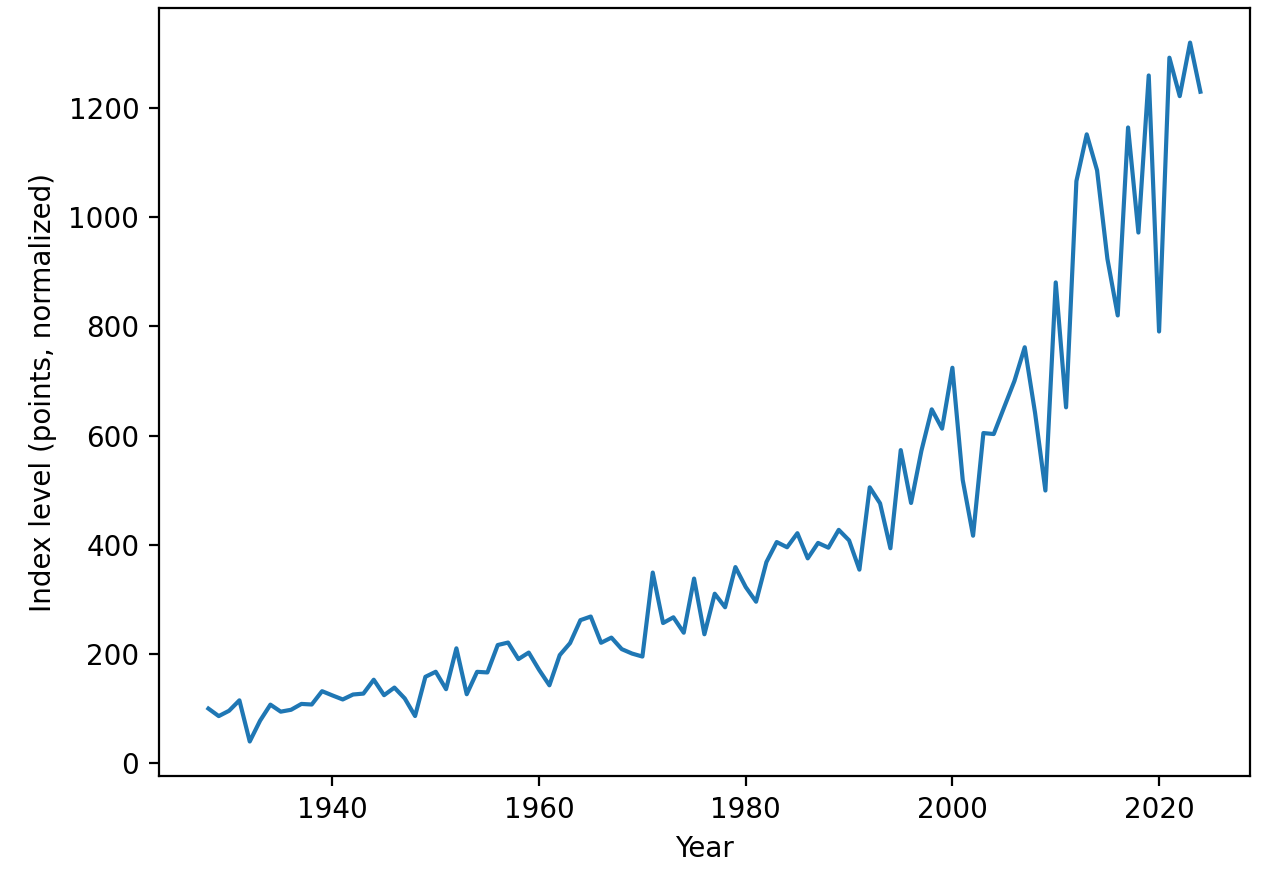
The S&P 500 is one of the most important stock market indexes in the world. It tracks the share price performance of the 500 largest publicly listed companies in the United States, providing a broad picture of overall market conditions, and serves as one of the primary benchmarks for global financial markets. The index represents companies from various sectors, such as technology, healthcare, financials and consumer goods, which makes it one of the best indicators of the economic health of large corporations.
Over this period, equity markets have experienced several major crises, including:
The Great Depression of the 1930s,
The oil crises of the 1970s,
The dot-com bubble collapse in 2000,
The global financial crisis of 2008,
The COVID-19 crisis of 2020.
Yet as historical data shows, after each crisis markets have recovered over time and reached new record highs.
This is one of the primary reasons why a long-term approach is fundamental to investment success. When investments are made with a 10–20 year horizon, short-term volatility becomes far less significant.
How should investors respond during market volatility?
The greatest challenge for investors is usually not a lack of information, but emotions. When markets fall, there is an urge to sell and "cut losses," while during rapid growth the fear of missing out takes over. Yet historical experience shows that the most consistently successful approach is disciplined and consistent action, rather than attempts to time market peaks and troughs.
When markets fall
Market downturns are a regular occurrence. During such periods, investors typically have three rational options:
Hold investments and do nothing. If a portfolio is diversified and the investment horizon is long-term, panic-driven selling often means realizing losses at precisely the worst possible moment.
Continue investing regularly. If an investor contributes periodically (for example, monthly), a market downturn actually represents an opportunity to buy assets at a lower price (dollar-cost averaging).
Review the portfolio, but not impulsively. Downturns sometimes reveal excessive risk or insufficient diversification, which may warrant reconsidering the portfolio structure.
The most important principle here is simple: market downturns are unpleasant, but they are also a normal part of the investment cycle.
When markets rise rapidly
During rapid growth, investors often face the opposite risk — excessive optimism. When prices climb, it can feel as though the market will rise indefinitely, and investors may begin taking on more risk than they originally intended.
In such moments, a rational approach might include:
Maintaining your original investment strategy. If the goal is long-term wealth accumulation, there is no need to change the plan simply because markets have risen.
Periodically rebalancing your portfolio. If the value of equities in the portfolio has grown significantly, it may be prudent to sell a small portion and restore the original asset allocation.
Avoiding FOMO (fear of missing out). In history, nearly every rapid surge has eventually been followed by a correction.
The key takeaway: both during market downturns and periods of growth, the most successful investors are those who follow a clear long-term strategy. This typically means a diversified portfolio, regular investing, and emotional discipline.
How to reduce investment risk: 5 practical tips
To better understand how investment risk management works in practice, here are some fundamental principles.
1. Only invest money you will not need in the near term
Market volatility is inevitable and not always predictable, so it is important not to over-commit and invest money that you may need:
For expenses in the coming months,
For unexpected emergencies,
For loan repayments.
Financial advisors recommend first building an "untouchable" emergency fund (typically covering 3–6 months of living expenses).
2. Diversify your portfolio
As mentioned above, one of the primary tools for risk reduction is diversification.
In practice, this might mean:
Investing in several different securities rather than one,
Combining different asset classes, such as shares, bonds and alternative investments,
Spreading capital across different issuers, sectors and platforms.
This helps avoid a situation where a single poor investment undermines your entire portfolio.
3. Think long-term
In the short term, markets can be highly volatile, but over longer periods fluctuations tend to smooth out. A strategy that has delivered stability and long-term success for thousands of successful investors involves:
Investing regularly, without trying to "time the market" for the perfect moment,
Focusing on long-term outcomes,
Keeping a level head during crises and avoiding emotional decision-making.
4. Evaluate risks before investing
An investor ready to take their first steps into the world of investing will naturally ask: what should I check before investing?
Understand and clarify how returns are generated.
Identify the investment model and which risk category it belongs to.
Determine the investment term and whether, and under what conditions, it is possible to withdraw funds early if needed.
Understand what collateral or other protection mechanisms are in place.
Identify the main risks associated with the chosen sector or asset class.
5. Be wary of "Too good to be true" offers
Just as in many other areas of life, it pays to listen to your instincts when it comes to finance. If something sounds too good to be true, there is a strong chance that you are not being told the whole story.
Be particularly cautious about:
Guaranteed very high returns,
Non-transparent investment models,
Projects without clear, accessible information.
Before investing, it is always worth asking one simple question: where exactly does the profit come from?
Investment risk: Final thoughts
Investment risk is an inseparable part of financial markets — but it is not a reason to avoid investing altogether.
Quite the opposite: by understanding risk and applying principles such as diversification, long-term thinking, and consistency, investors can significantly reduce their exposure to investment risk.
Investing is not a sprint, but a long-term process. Investors who understand risk and take a thoughtful approach are generally better equipped to make consistent decisions even in volatile market conditions.
Email: [email protected]
Address: Dzirnavu iela 42, Riga, LV-1010, Latvia
This material is informational and is not an individual investment recommendation.